
Asynchronous Work: Why I Stopped Expecting Everything to Happen in Real Time
For a long time, I associated asynchronous work with remote teams spread across different time zones. I thought of it as a communication method companies used when one person was finishing work in London while someone else was starting the day in Seoul. Working independently seemed different. If I was the only person responsible for my schedule, there was nobody else I needed to coordinate with asynchronously.
Over time, I realized I was already dealing with the same problem in a different form.
Not every part of my work can happen when I want it to. I send an email and wait for a reply. I finish one stage of a project but need information before I can continue. I submit something for review, wait for a platform to process it, or leave a problem overnight because I no longer have enough attention to solve it properly. Even when nobody else is involved, I move between projects that are at completely different stages.
The more things I work on at once, the less useful it becomes to expect every task to move forward in real time.
Learning to work around those gaps has changed how I organize my days. Instead of treating waiting as an interruption, I try to build a system where one piece of work can pause without bringing everything else to a stop.
That, more than time zones or remote meetings, is what asynchronous work has come to mean in the way I work alone.
Asynchronous work starts with accepting that some things will wait
I used to have a strong preference for finishing things while they were still in front of me.
If I sent a message that affected a project, I wanted the answer quickly so I could keep going. If I ran into a technical problem, I wanted to solve it before moving to something else. If a decision was unresolved, it stayed mentally open even when there was nothing useful I could do about it.
This works reasonably well when there are only a few moving pieces.
It becomes much harder when several projects are active at the same time.
One project may be waiting for information. Another may need a decision I am not ready to make. Something else may require research. A platform may take time to approve or process something. A person may not reply until the next day.
None of these situations necessarily means the work is going badly. They simply mean the work does not move at the same speed.
The problem begins when I treat every delay as something that needs my continued attention.
I can spend twenty minutes checking whether something changed, rereading the same email, opening a dashboard again, or thinking about a decision I cannot make yet. The task is paused, but my attention has not paused with it.
Asynchronous work became more useful to me when I started separating those two things.
A project can be waiting without requiring me to wait with it.
I need to know exactly where something stopped
The difficult part of pausing work is not stopping. It is returning.
If I leave a project without recording what happened, I often have to reconstruct the situation when I come back. I need to remember what I was waiting for, what had already been decided, which step was complete, and what was supposed to happen next.
That makes every pause more expensive than it needs to be.
This is where documentation and asynchronous work overlap for me.
Before I leave something unfinished, I try to make the next step visible. Sometimes that means writing one sentence. Sometimes it is a task with a clear condition attached to it: continue when the client replies, review after the data updates, check again after a certain date, or make the decision once another piece of work is complete.
The point is not to create a complicated project management system.
I just do not want to reopen a task later and wonder why I stopped.
A good stopping point should contain enough information for me to resume without having to recreate my previous train of thought.
Waiting becomes easier when I have somewhere else to go
One of the reasons waiting can feel so uncomfortable when working alone is that there is no manager or team automatically redirecting the day.
If the thing I planned to work on cannot move forward, I have to decide what replaces it.
Without a clear alternative, it is very easy to remain half-attached to the blocked task. I check for updates. I make tiny changes that do not matter. I tell myself I will start something else after I hear back.
Sometimes hours disappear this way.
I have found it more useful to keep several kinds of work available at once.
There are things that require deep concentration, things I can do while waiting for information, short administrative tasks, research that is not urgent, and projects that can move forward independently of anyone else’s response.
I do not need every category filled at all times. The value is simply knowing that a blocked task does not leave me with nothing useful to do.
This is one of the biggest practical advantages I see in asynchronous work. It reduces the importance of any single task being ready at exactly the moment I planned to work on it.
Not every response deserves an immediate response
Working online creates a strange expectation of availability.
Messages arrive instantly, so it can feel as though they should be answered instantly. Email notifications appear while I am doing something unrelated. A small request can seem easier to handle immediately than to leave for later.
The problem is that each response changes what I am thinking about.
Even if answering takes only three minutes, I may spend much longer returning to the work I interrupted.
I have become more selective about what actually requires a real-time reaction.
Some messages are urgent. Most are not.
A question that can wait an hour does not become more valuable because I answered it in ninety seconds. An email that arrives while I am concentrating on something difficult usually remains perfectly answerable later.
This sounds obvious, but the tools I use are designed to make new information feel important. A notification appears now, which makes now feel like the correct time to respond.
Asynchronous work gives me permission to separate arrival time from response time.
That distinction is simple, but it makes independent work much easier to control.
I try to make tasks understandable without relying on my current mood
There are days when I remember exactly what I intended to do and days when I do not.
This is another reason I prefer making work explicit instead of leaving vague reminders.
A task called “website” tells me almost nothing.
A task that says “check why this page lost impressions after the title change” gives me somewhere to begin.
The difference becomes especially important when I return to work after a few days away or when I move between several unrelated projects. I may not have the same level of interest, urgency, or mental context that I had when I created the task.
Clear next actions make the work less dependent on that temporary state.
I do not always achieve this. My task lists still contain items that make perfect sense when I write them and look completely mysterious later. But I notice the difference whenever I take the extra few seconds to describe what the task actually requires.
Asynchronous work depends on being able to transfer work across time, even when the person receiving it is a later version of me.
Real-time work still has a place
I do not think everything should become asynchronous.
Some problems are much easier to solve when I stay with them. Certain conversations benefit from immediate back-and-forth. If I am making good progress on something difficult, interrupting that momentum just because I technically could continue later would be inefficient.
There are also times when waiting makes a problem worse.
An urgent client issue, a security problem, a payment issue, or something with a real deadline may deserve immediate attention.
The useful distinction for me is not asynchronous versus synchronous as if one is always better. It is whether the work actually needs to happen now.
When I started asking that question more deliberately, I noticed how many things I had been treating as urgent simply because they were visible.
An unread message was visible. A notification was visible. A tab showing an unfinished task was visible. Visibility and urgency are not the same thing.
Too many open loops create their own problem
There is a downside to working asynchronously: it becomes very easy to have too many things in progress.
If I allow every project to pause and resume freely, I can end up with a large collection of half-finished work. Each individual project may be well documented, but together they create mental clutter.
I have learned that asynchronous work still needs limits.
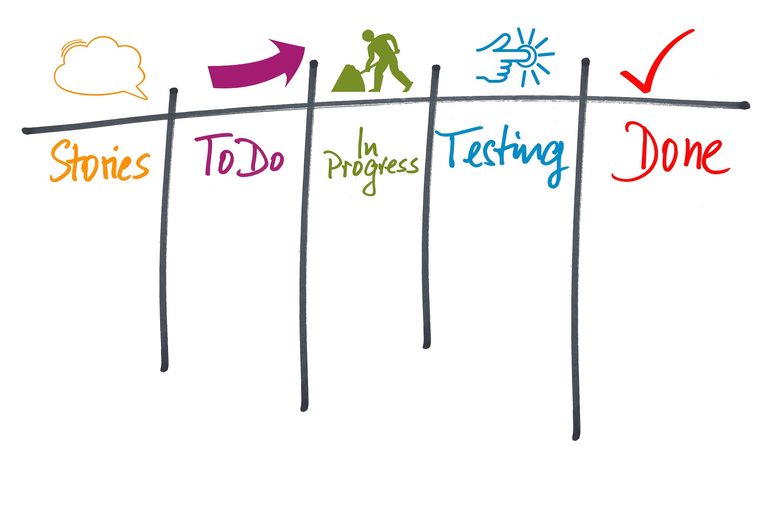
At some point, I have to decide whether something is actively in progress, genuinely waiting, scheduled for later, or simply not important enough to continue.
The category I find most dangerous is “I will come back to this eventually.”
It sounds harmless, but enough of those tasks create a background sense that everything is unfinished.
When I can, I prefer to give paused work a condition or a date.
That small distinction makes it much easier to trust that I do not need to keep remembering everything that is currently paused.
Asynchronous work protects my attention more than my schedule
I originally thought asynchronous work was mostly about time. Work at different hours. Reply later. Let people contribute when they are available. Working alone has made me see it more as a way of managing attention.
The valuable part is not simply that I can do something later. It is that I can stop carrying it mentally until later arrives. If I know where a project stands, what I am waiting for, and what will trigger the next step, I do not need to keep checking it.
That frees my attention for whatever I am actually doing now.
This matters because independent work already contains a lot of switching. I am responsible for work that would often be divided between several roles inside a larger company. I cannot remove all of those transitions, but I can avoid adding unnecessary ones by reacting to every new piece of information as soon as it appears.
The ability to postpone something confidently is surprisingly valuable.
What asynchronous work looks like when I work alone
My version of asynchronous work is not particularly sophisticated.
I try to leave enough context when I stop a project. I separate tasks that are waiting from tasks I can actually act on. I avoid treating every message as an immediate request. I make the next step specific enough that I can understand it later. When possible, I give paused work a condition for restarting instead of keeping it vaguely open.
None of these habits completely eliminates interruptions or waiting. They simply prevent one delayed task from controlling the rest of my day. That has become increasingly important as I take on more types of work. There will always be things I cannot finish immediately, answers that do not arrive when I want them, decisions I need to postpone, and projects I need to leave for a while.
I used to experience many of those gaps as friction. Now I am more likely to see them as part of the structure of independent work. The goal is not to make everything move continuously. It is to build a way of working where things can stop, wait, and start again without taking all of my attention with them.