Energy Management: How I Build a Workday Around My Energy, Not the Clock
For a long time, I thought a productive workday was supposed to have a recognizable shape. Start at a reasonable hour, work through the morning, take lunch, continue through the afternoon, and stop when the conventional workday was over. Even after I began working more independently, some version of that schedule stayed in my head as the standard I was supposed to reproduce. If I was focused at 10 a.m., that felt productive. If I suddenly had a burst of concentration later in the evening, it somehow felt less legitimate, as though useful work only counted when it happened at the correct time. The longer I have worked on my own, however, the less interested I have become in forcing every day into the same pattern. What matters much more to me now is energy management: noticing when I can think clearly, when I am better suited to routine work, and when pushing harder is likely to produce very little.
This does not mean I wake up every morning and simply do whatever I feel like doing. I still have deadlines, messages that need answers, practical responsibilities, and work that cannot always wait for the perfect mental state. What has changed is the assumption that every hour of the day is equally useful for every kind of task. I know from experience that there are periods when I can sit with a complicated problem for a long time without feeling much resistance, and other periods when the same problem feels unnecessarily difficult. I also have hours when writing comes easily but administrative work irritates me, and others when I am perfectly happy to organize files, update something on a website, or work through a list of small tasks while deeper thinking feels almost impossible. Instead of treating those differences as failures of discipline, I have started designing my workday around them.
Energy management changed how I think about a productive day
The biggest shift has been separating productivity from the number of hours I spend looking busy. When I worked with a more conventional idea of a workday, I often judged myself by continuity. A good day seemed like one in which I started early, stayed at my desk, and maintained a reasonably steady level of output until I was finished. The problem is that my actual concentration has never behaved that neatly. I can have two hours in which I understand something quickly, make several useful decisions, and write better than I would in twice the time later. I can also spend an entire afternoon technically working while repeatedly rereading the same information because my brain is no longer cooperating.
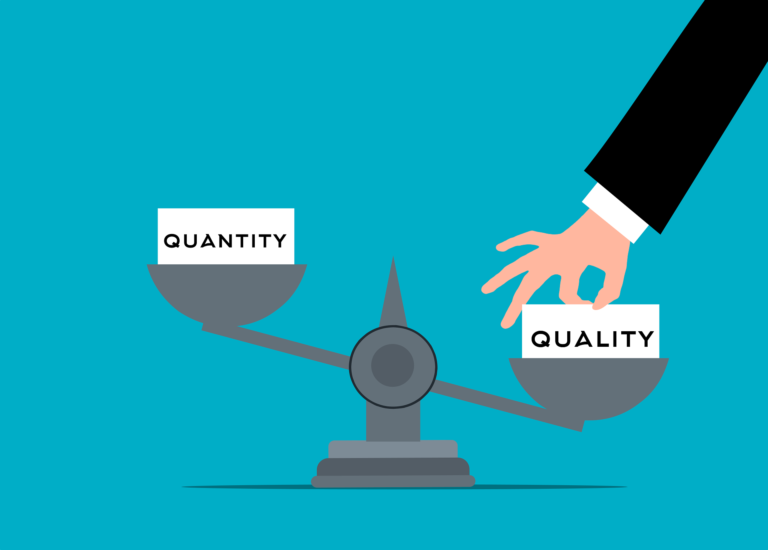
Once I noticed this, it became difficult to keep pretending that the hours were interchangeable. Two hours of clear concentration and two hours of forcing myself through mental resistance may occupy the same amount of time on a calendar, but they do not produce the same work. This is especially noticeable in independent work because so much of what I do depends on thinking rather than simply being present. Writing, research, planning, learning something unfamiliar, and making decisions all require a quality of attention that I cannot manufacture just by keeping a browser window open.
Energy management has therefore become less about squeezing more out of myself and more about putting the right kind of work into the right part of the day. If I have a period when my thinking feels unusually clear, I would rather use it on something that actually benefits from that clarity than spend it cleaning up minor tasks simply because they happen to be next on a list. Likewise, if my concentration is weaker, I do not necessarily need to stop working. I may just need to change what I am asking myself to do.
I have different kinds of energy for different kinds of work
One thing I used to miss is that feeling “tired” is not always a single state. Sometimes I am physically tired but can still write. Sometimes I have plenty of physical energy but no patience for decisions. There are moments when I do not want to produce anything new but can happily edit something that already exists, and times when research feels interesting while opening an inbox feels strangely unbearable. The more closely I pay attention, the less useful it seems to divide the day into only two categories: productive or unproductive.
I think of my work more in terms of modes now. There is work that needs sustained concentration, work that needs creativity, work that requires judgment, and work that mostly needs completion. Those modes overlap, but they do not always ask the same thing from me. Writing a difficult article from scratch is different from formatting one that is already written. Comparing several options for an important decision is different from uploading an image or updating a page. Learning a technical concept is different from clearing routine administrative tasks.
This also changes what I do when I feel myself losing momentum. I used to interpret a drop in concentration as a signal that the entire workday was going badly. Now I am more likely to ask whether the problem is the work itself or the type of attention it requires. If I have been writing for several hours and can no longer form a decent paragraph, switching to a simpler task may be more useful than spending another hour trying to force the same mental state to continue. The day is not necessarily over. I may simply be finished with one kind of work for the moment.
That flexibility is one of the parts of working independently that I value most. I do not have to make every hour look identical just because that would make the schedule easier to explain.
I try to protect the hours when thinking feels easiest
My highest-energy hours are valuable precisely because there are not that many of them. If I use them casually, I usually regret it later.
It is very easy to begin the day with whatever feels easiest to complete. I can check email, look at analytics, make small website changes, organize something, and deal with minor tasks that give me quick evidence that I have started working. None of those things is inherently unnecessary, but they can quietly consume the part of the day when I am best able to do more demanding work.
I have become more careful about this because I know what happens when I postpone difficult thinking until I have already spent several hours switching between small tasks. The article I wanted to write becomes harder. The research I need to understand takes longer. A decision that might have felt manageable earlier starts to feel heavy. By then I may conclude that I simply do not have enough focus that day, even though I had it and spent it elsewhere.
So when I notice that my mind is clear, I try to give that period to work that deserves it. That might mean writing, learning, planning, solving a problem, or doing something else that requires me to hold several ideas in my head at once. I do not always succeed. Email is still tempting. Analytics are still easy to check. Small unfinished tasks still create the illusion that clearing them first will make it easier to concentrate afterward. Sometimes it does. Often it simply means I have traded my best attention for a cleaner to-do list.
This is also where my thinking about context switching has started to matter. The more frequently I interrupt a good period of concentration with unrelated work, the less likely I am to get the full value from that period. I do not need complete silence or a perfect environment, but I do try to recognize when something is going well enough that I should avoid unnecessarily breaking it.
Lower-energy hours are still useful to me
Designing work around energy could easily become another excuse to wait until I feel perfect, and I do not want that either. If I only worked when I felt highly focused and motivated, quite a lot of necessary work would never get done.
What helps is having tasks that fit lower-energy periods.
There are always things that need to be reviewed, organized, uploaded, renamed, checked, scheduled, or cleaned up. I can answer straightforward messages, make small edits, prepare material for something I will do later, or handle parts of a project that are already clearly defined. Some of this work is not particularly exciting, but that is exactly why I prefer to do it when I would not be using my attention very well on something more demanding anyway.
This has made me appreciate small administrative tasks more than I used to. They are not merely annoying things standing between me and “real work.” They give me a useful place to put time that may not be suitable for writing or deep concentration. A task that feels wasteful during my best thinking hours can be exactly right later in the day.
I also find that doing something manageable during a low-energy period can sometimes restore momentum. If I am staring at a difficult problem and getting nowhere, completing a few simpler tasks gives me a chance to stop fighting with the same thought. I may return to the difficult work afterward, or I may not. Either way, the time is not automatically lost simply because I am not operating at maximum intensity.
The important part is that I no longer expect myself to produce the same type of work continuously from morning until evening.
I do not want every day to have the same rhythm
Some days begin slowly and improve later. Others start well and then fade quickly. There are days when I can stay with one project for hours and days when several smaller tasks make more sense. I used to find this inconsistency frustrating because I assumed a good work system should make my days more uniform. Now I think the opposite may be true: a useful system should be flexible enough to work with some variation.
That does not mean I ignore routines. Routines remove unnecessary decisions, and I like having a general sense of what needs to happen. But I do not want the routine to become more important than the work itself. If I planned to write in the morning but discover that my attention is unusually poor while a different useful task feels easy to complete, I am willing to adjust. If I suddenly reach a very productive stretch later than expected, I may stay with it instead of stopping simply because a clock tells me the official workday should be ending.
This freedom is one of the reasons I enjoy working independently. I can pay attention to what actually produces good work instead of preserving the appearance of a conventional schedule. I do not need to prove that I was equally productive at 9:30 a.m., 1:15 p.m., and 4:40 p.m. I need to make progress on the things that matter and build a way of working that I can continue without constantly fighting myself.
There is also something reassuring about accepting that a slower day does not predict tomorrow. If I cannot think particularly well one afternoon, I no longer feel the same pressure to rescue the entire day. I can finish what makes sense, leave myself enough context to return, and try again when my mind is in a better state. That is much more useful to me than spending hours trying to force productivity after it has clearly stopped being productive.
Working around my energy helps me make better decisions about stopping
One of the hardest things about working for myself is deciding when I have done enough. There is always another task available. Because my workplace is also a laptop I can open at almost any time, there is no natural moment when the office closes and the work becomes inaccessible.
A clock-based schedule offers an easy answer: stop at a certain hour. I understand why that can be useful, but I have found that my own stopping points often depend on more than time.
If I am working unusually well on something important, I may continue longer because stopping at that moment would create more friction than finishing the thought. On another day, I may recognize much earlier that the quality of my work has dropped and that continuing would mostly create material I need to redo. Those two days can involve very different numbers of hours without one necessarily being more productive than the other.
Energy management helps me see stopping as part of the work rather than as evidence that I lacked discipline. There is a difference between giving up because something is uncomfortable and noticing that I have reached the point where extra effort is producing very little. I do not always know which one is happening, but I have become better at recognizing the pattern.
I also try to leave myself a usable stopping point when I can. If I know I am losing concentration, spending a few minutes writing down what I was doing and what I intended to do next is usually more valuable than forcing myself through another half hour of poor-quality work. Good work documentation makes this much easier because I am not asking my future self to recreate the entire state of the project from memory.
I still use the clock, just differently
None of this means time has become irrelevant. Meetings happen at specific times. Deadlines exist. Some tasks need to be finished before other things can happen. I also need boundaries, because without them independent work can spread across the entire day.
The difference is that I use time as a structure rather than as the main measure of whether I am working correctly.
I can set aside a morning for writing without assuming that every minute of that morning will be equally productive. I can decide to stop checking something after a certain hour without expecting my energy to disappear on command. I can block time for a difficult task while still paying attention to whether I am actually in a state where the block is being used well.
This makes schedules feel less like instructions I have failed whenever reality changes. They are plans, and plans can be adjusted.
For me, this is a much more sustainable form of energy management than trying to engineer the perfect daily routine. I have tried enough productivity systems to know how appealing it is to imagine that one ideal schedule will solve everything. The problem is that my work changes, my priorities change, and I change. A system that only functions when every day looks the same is unlikely to survive very long.
Building a workday around my energy has made work feel more human
The practical benefit of working this way is that I often get better work from fewer frustrating hours. But there is another benefit I value just as much: I feel less as though I am constantly failing an invisible schedule.
There are still days when I procrastinate, waste time, choose the wrong task, or misjudge how much energy I have. Paying attention to energy has not made me perfectly efficient. What it has changed is the way I interpret those moments. I am less likely to assume that difficulty automatically means I need more discipline, and more likely to ask what kind of work I am trying to do, what state I am in, and whether there is a better way to use the next part of the day.
Sometimes the answer is to keep going. Sometimes it is to switch to something simpler. Sometimes it is to stop and return later. Having those options makes working alone feel less like reproducing an office schedule by myself and more like taking advantage of the flexibility that independent work actually gives me.
I still like plans. I still make lists. I still care about deadlines, routines, and getting things done. I have simply stopped believing that the best workday is the one that looks the same from beginning to end.
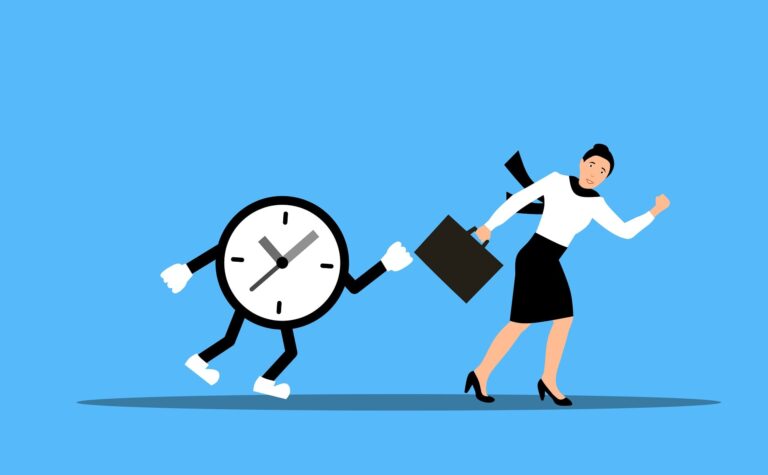
For me, energy management is about knowing that attention has different qualities at different times and treating those differences as useful information. I want difficult work to meet me when I am most capable of doing it, routine work to fill the quieter parts of the day, and rest to happen before exhaustion turns everything into a struggle. The clock still tells me what time it is, but it no longer gets to decide what kind of work I should be capable of doing at every hour.
That has made my schedule less tidy than the one I once imagined I should have. It has also made it much more realistic, and I would rather build a workday around the way I actually work than spend every day trying to become someone whose energy follows a perfect timetable.